
“Dukeiness”: The Secret Asset Of Blue Devils
By
Leonard Zwelling
The BW (Beautiful Wife) and I traveled to Washington, DC for a special joint meeting of the Duke Medical Alumni Council (Dr. Kleinerman) and the Duke Medical School Board of Visitors (BoV) (me). The Medical Alumni Council is comprised of graduates of the Duke Medical School who serve as advisors to Dean Mary Klotman. The BoV also advises the Dean, but is made up of people from all walks of life, most with some connection to Duke as graduates or as parents.
On the morning of the first day (May 14), information sessions were aimed at bringing both groups up-to-date on Duke’s accomplishments and plans to weather the storm of decreases in federal funding. Dean Klotman conducted a one-on-one interview with Duke President Vincent Price. The President’s presence was truly special for all of us. It was my first chance to hear him in person and, of course, to shake his hand and thank him for the fantastic job he has done at Duke. Both of these two leaders did not disappoint.
First, that was a lot of IQ points sitting in just two chairs with an awful impressive list of career accomplishments as well as stellar service to Duke.
Second, both of these leaders could articulate the vision for the medical school and the entire university in simple yet readily comprehensible language that was both aspirational and inspirational. They were clearly a team that understood each other’s goals and responsibilities. They made us understand these, too and want to be a part of everything Duke.
Dean Klotman outlined the challenges she faces including the search for new departmental chairs, the blockade of federal funds flowing to the universities by the Office of Management and Budget, and the challenge of developing a better health care network for North Carolina and potentially beyond. In all of the plans was the understanding of the critical role of biomedical research in making progress in clinical care as well as the inclusion of AI in all aspects of each department in the medical school.
President Price picked up on the importance of technology in making progress and the unique role of Duke graduates. These alumni use their broader educations when compared to those of graduates from other, more technically- focused schools. Duke graduates use their knowledge of liberal arts as well as their comfort with sciences to fulfill necessary roles in industry requiring human interaction as well as technical skill.
He then shifted to the essence of what brought everyone in that room to DC. We all love Duke. We are all grateful to Duke for making our lives better and our careers possible. And there were more than a few multi-millionaires in the room and a billionaire hosted our dinner that evening, Duke graduate David Rubinstein founder of the Carlyle Group, the world’s largest private equity and alternative asset management firm.
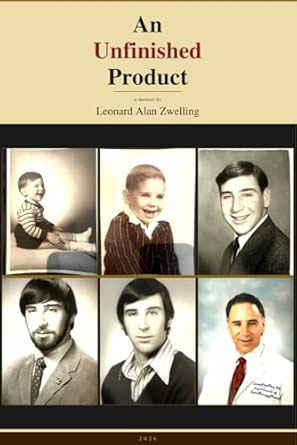
This unique combination of service and gratitude shared among Duke graduates is something I emphasize in my new book An Unfinished Product: A Memoir. Without Duke, no Dr. Len, physician-scientist, and no Len and Genie either. I owe everything to Duke. One of the most important moments of my life that I described in my memoir occurred on the morning of April 15, 1966 when Yale put me on the waiting list and Duke accepted me. I became a Blue Devil for life when I was 17, exactly 60 years ago.
Until this session, I did not have a name for the emotion, devotion, loyalty, and pride these assembled groups shared. Dr. Price gave me the word—“Dukeiness.”
I understand that we Blue Devils are resented in some circles, but that’s mainly because we win too many basketball games and are in the Final Four on a regular basis.
In other walks of life, our Dukeiness is appreciated. We simply know there must be a better way. We will use every tool at our disposal to solve any problem and partner with anyone, especially those outside our own area of expertise, to do so. As I stated above, Dean Klotman has AI people embedded in every academic department. There is not so much a department of AI, but all departments use AI.
The next morning we heard about health policy from none other than Mark McClellan, former head of the FDA and CMS, who leads the Duke-Margolis Institute for Health Policy which has made major contributions to academic research in health policy and whose members are advisory to our nation’s and North Carolina’s lawmakers. Duke is essential here, too. And all the speakers on health policy echoed the value of the singular unique characteristic of Duke’s leadership and its medical scientists—Dukeiness.
Dukeiness in clinical care is being spread throughout the Duke Health network. It is a given that the care at the mother ship and the care in Cary will be of an equally high caliber. Duke is not going to slap its name on an existing health care facility and charge for the privilege.
And where the attempt to start a medical school for the government of Singapore failed when Johns Hopkins tried, the Duke-NUS Medical School in Singapore just celebrated its 20th year. The BW and I visited that school and spent time with the students. Everyone there was excellent in every way.
All weekend was a celebration of Dukeiness. I am so lucky to be included in this group of Duke stalwarts.
A long time ago, the late-Dr. Suydam Osterhout, the man who chose the Duke Medical School class back then, told my first-year class:
“At Duke we do not make cookies. We make cookie cutters.”
That’s Dukeiness. It was true then. It’s true now. We are working to make it true always. We are MADE FOR THIS.
Go Blue!

2 thoughts on ““Dukeiness”: The Secret Asset Of Blue Devils”
So great to have you on the board and at the meeting and at my home. Go Duke!
Thanks for reading. I hope you stay with the blog. It’s about all kinds of stuff. LZ